UX Research & Design: Oct – Dec 2023
Component Design: 2024
EXPTo (Experience Toronto) is a ticket discoverability mobile application designed during the 'Fundamentals of UX Design' course as a team. Designed for Toronto's GLAM sector, its goal is to make it easier to find discount information.
This started as an academic group project for a UX course to design a solution for a public sector issue. Our group landed on the GLAM sector (Galleries, Libraries, Archives, and Museums) because all six of us genuinely cared about it.
We designed an app that would ensure that the information about cultural programming was available at a single aggregated source, ready to be used and shared.
We were a group of 6 UX researchers: Kyle Thomas, Quinn Kavaner, Vivian Zhang, Ankush Sood, Rebecca Ding. While the research was done as a team, the team split into pairs to do creative direction, low-fidelity prototyping, and testing. Kyle and I did prototyping. After the course concluded, I did the component design and high fidelity design based on the feedback we received on the low-fidelity prototype.
These were the key Insights from our mixed-methods research
36 survey participants. 12 interviews. Market data spanning pre- and post-pandemic attendance. All Three sources pointed to the same pain point. Discount programs already existed; people simply couldn't find them.
key Data Point: 24 respondents said they'd visit museums more often, if discount information were simply easier to find.
This is why we decided to design a one-spot app for GLAM ticket discounts and offers.
Based on our research, we designed a low-fidelity prototype that had a search-first information architecture, with a map feature that allowed users to find nearby events.
The Map tested well in low-fidelity. But, Museums don't share data in a way that would allow us to build the map feature, and feedback showed that building it would have been a distraction, adding visual clutter that didn't address the problem. The pivot to search-first was an IA decision that matched the product's technical constraints while directly serving what research confirmed users actually wanted.
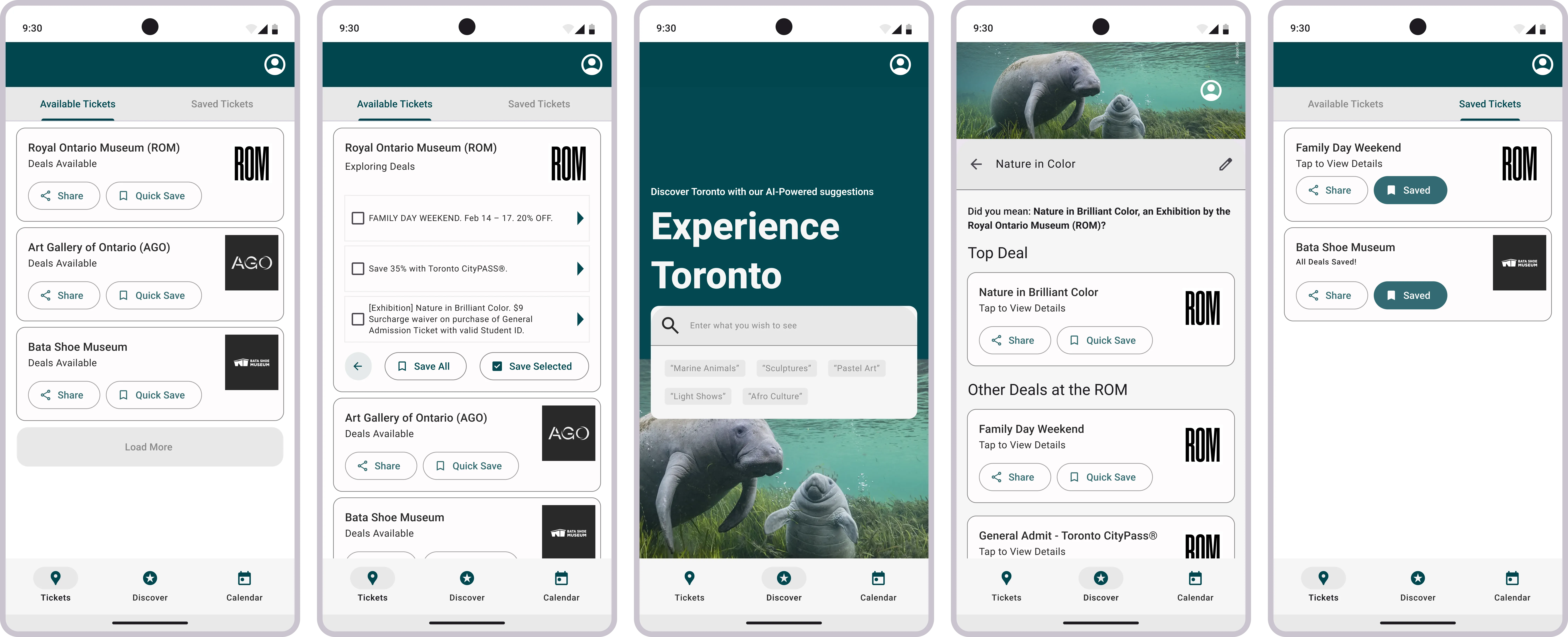
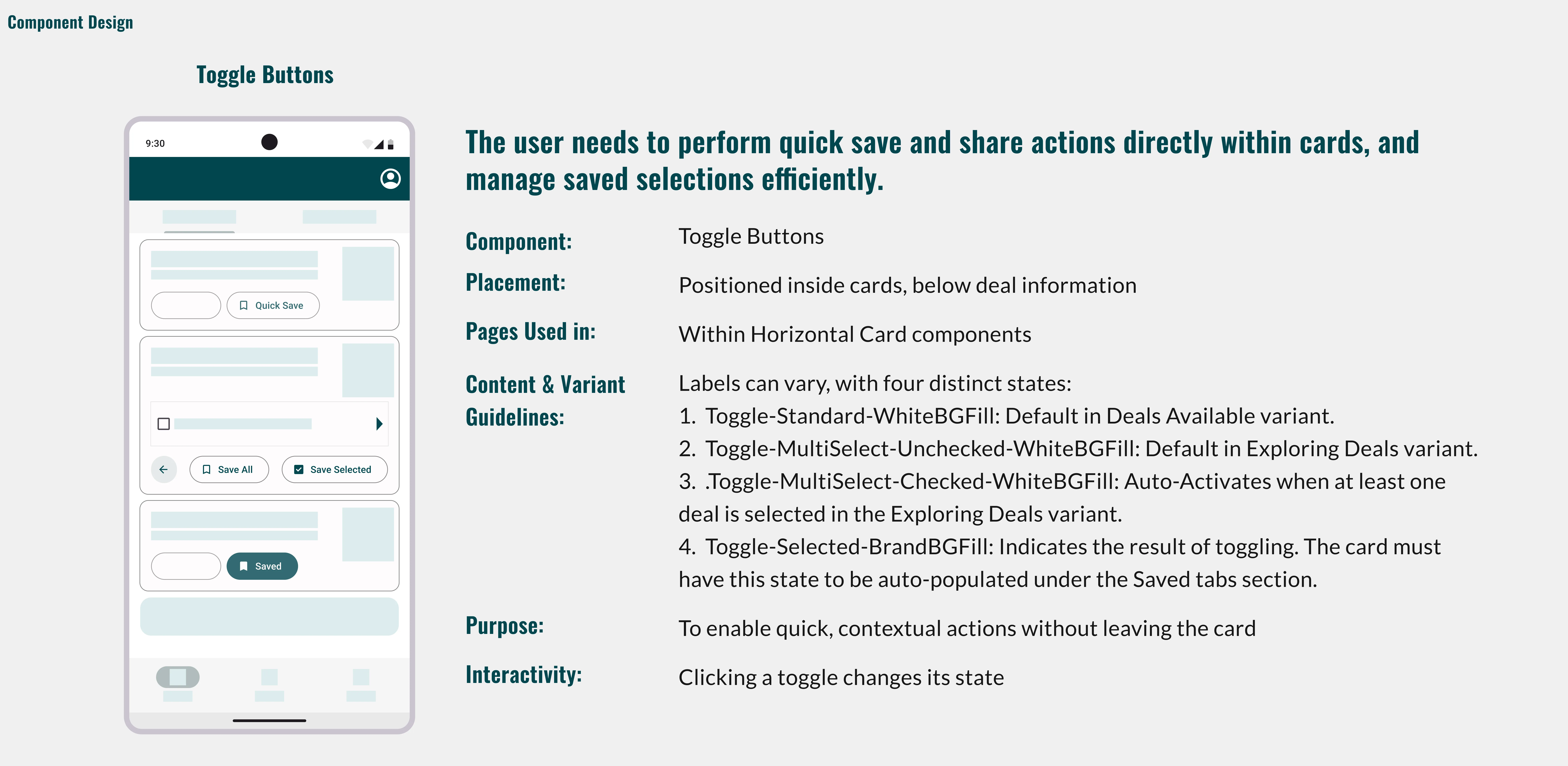
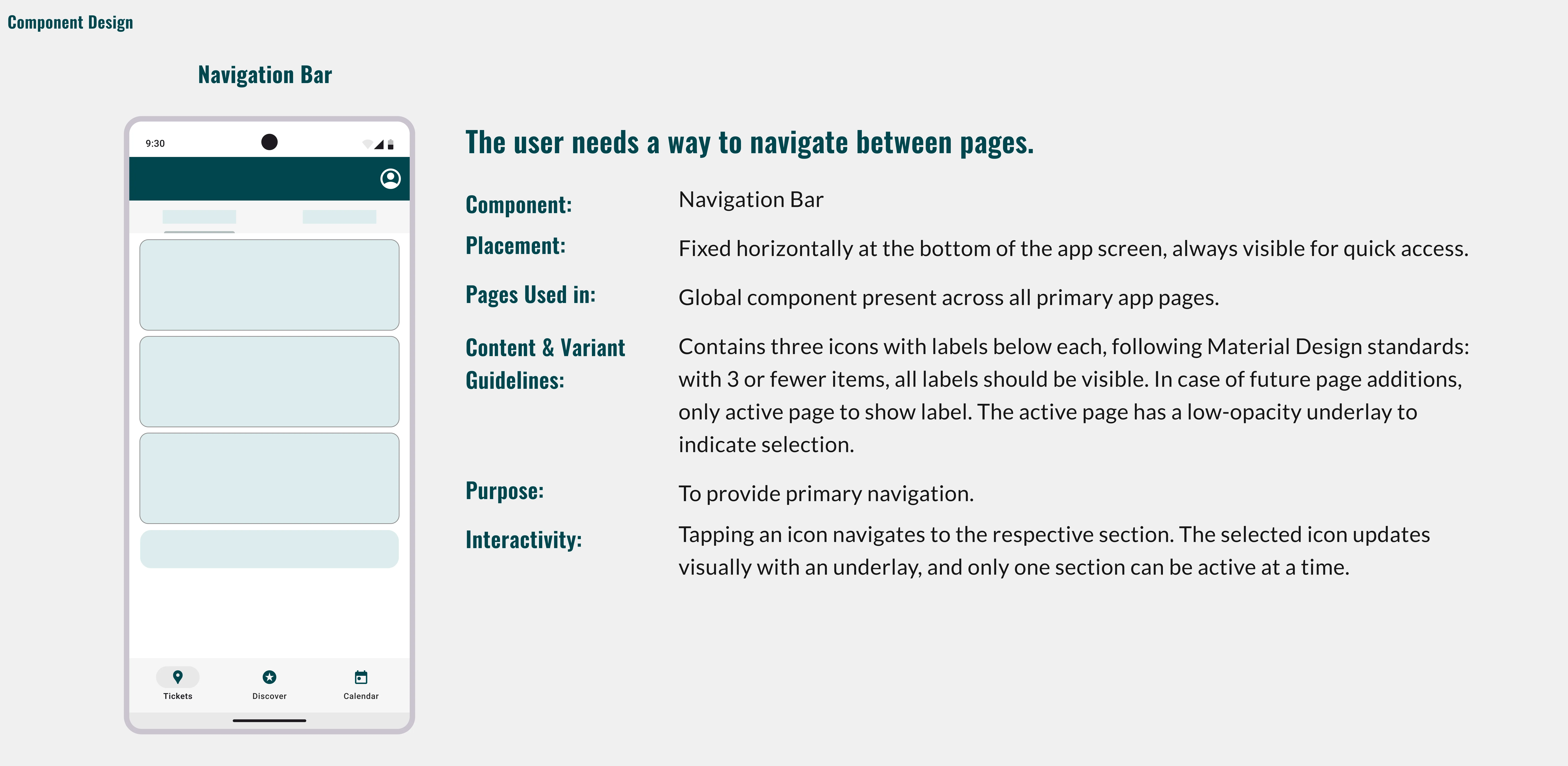
The high-fidelity component system was built by myself individually after the course ended, using lo-fi feedback as the brief.

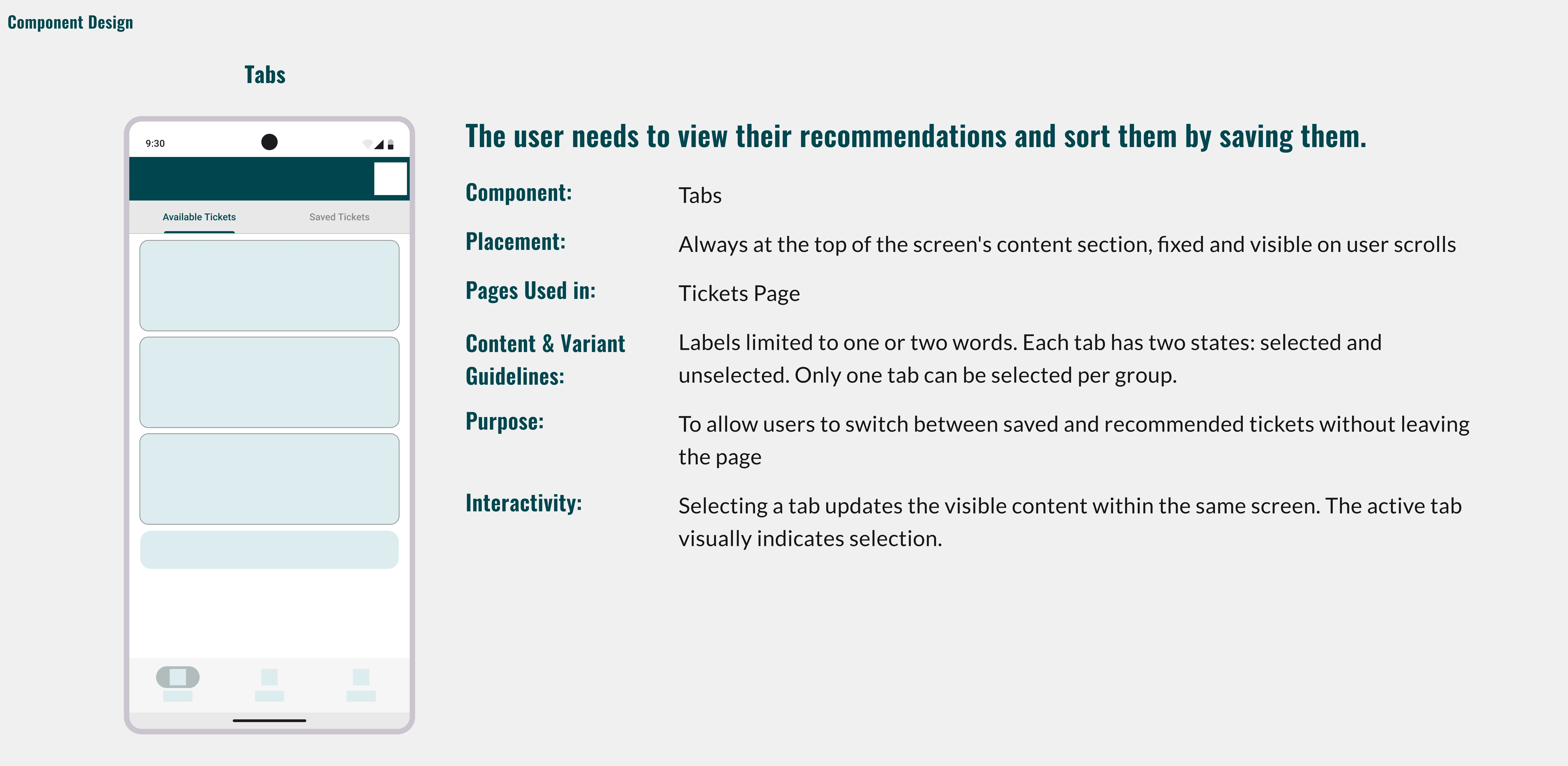
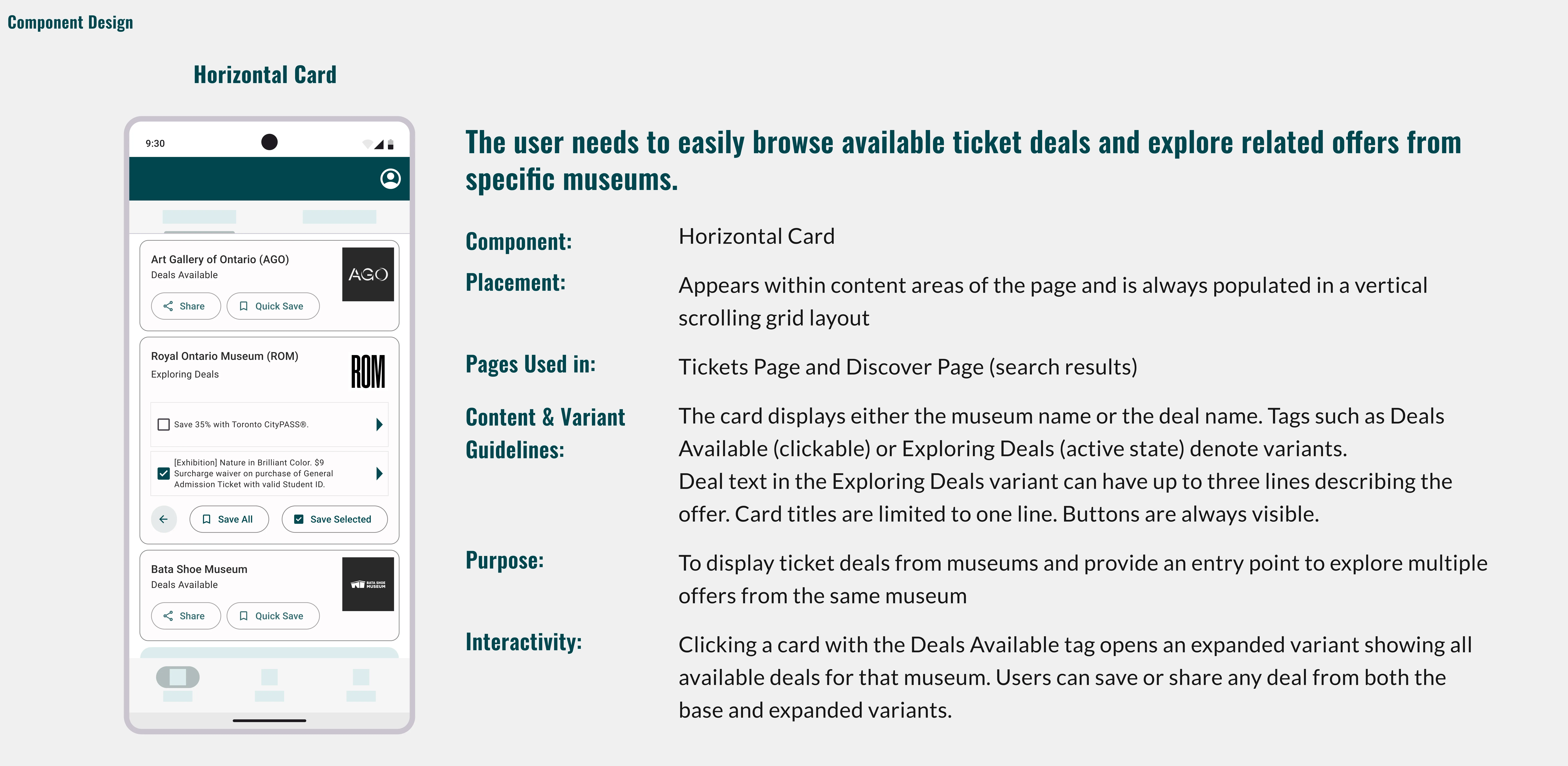
Design decisions made purely from user preference can be fragile. Decisions made purely from technical constraint can miss the point entirely. This project showed what it looks like when both validate each other.
Coming back to rebuild the UI after the course also told me something simpler: a prototype good enough to present isn't the same as work that's actually finished.
Many decisions we'd made when designing the Low fidelity version came apart when moving to high fidelity, which were also based on input I received from peers on how it would look like if potentially handed off and developed.